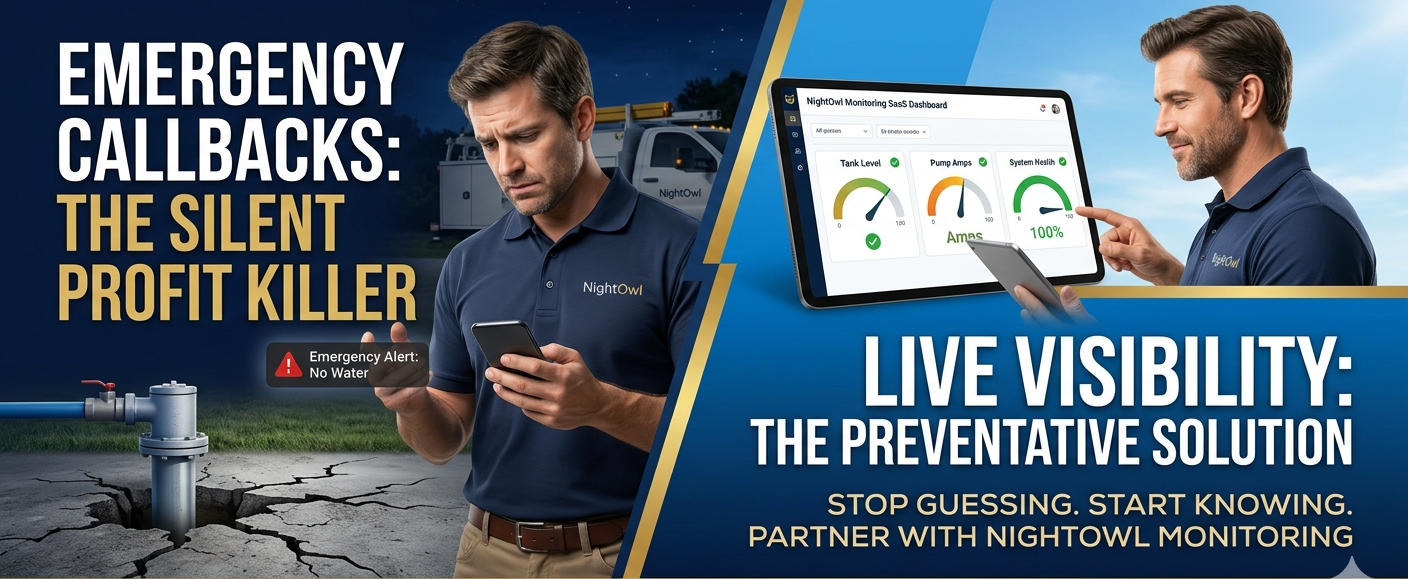
Every well driller knows the sound of a phone ringing at 2:00 AM. It is rarely good news. Usually, it is a frantic homeowner facing a no water emergency. You know the drill. You scramble a crew, load the truck, and head out into the dark.
These emergency callbacks are often seen as "part of the job." However, they are silently draining your profits. For a busy contractor, an unplanned service call is more than an inconvenience. It is a financial leak that can cost thousands of dollars every year.
The Reality of Emergency Callbacks in the Well Drilling Industry
In the well water industry, reputation is everything. When you install a system, the customer expects water to flow forever. When it stops, you are the first person they blame.
Emergency calls disrupt your scheduled high-margin projects. They force you to react rather than lead. Most drillers operate in a reactive cycle. You wait for a well system failure to happen before you fix it. This cycle is exhausting, expensive, and ultimately preventable.
What an Emergency Callback Really Costs You
The true cost of a callback is rarely just the hour spent on-site. It ripples through your entire business operation.
Direct Costs You Can’t Avoid
First, look at the immediate expenses. You have labor costs, often at overtime rates. There is fuel for the service truck and wear on your equipment. If you have to pull a pump in a rush, you are burning resources that weren't budgeted for this week.
Hidden Costs That Hurt More
The hidden costs are often the most damaging. When you pull a crew to handle a well pump failure, your scheduled installs sit idle. You lose the opportunity to start new, profitable projects. This "opportunity cost" is where the real money disappears.
The Reputation Risk
We live in the age of online reviews. A homeowner without water is stressed and frustrated. If you can't get there immediately, they might leave a negative review. Even if you do show up, they associate your brand with a "broken" system. This erodes the trust you worked hard to build during the initial drilling process.
Why Most “No Water” Emergencies Are Actually Preventable
Most homeowners think a well failure happens in an instant. As a professional, you know better. Systems rarely just "die" without warning.
Early Warning Signs Most Systems Give
Before a total failure, there are almost always symptoms. You might see fluctuating pressure or a pump that cycles too frequently. Perhaps the amperage draw is creeping up. These are the "check engine lights" of a well system.
The Real Problem — No Visibility After Installation
The issue isn't that the signs aren't there. The issue is that nobody is looking at them. Once you pack up your tools and leave the job site, you are flying blind. You have zero data on how that system is performing until the homeowner calls to complain.
The Biggest Gap in Traditional Well Services
Traditional well service is purely physical. You build it, you leave, and you hope it lasts. But there is a massive gap between installation and the first repair call.
Bridging this gap requires well water monitoring to keep an eye on system health. Without data, you are just guessing. By integrating smart technology, you can see issues before the homeowner loses a single drop of water. This shifts the power back into your hands.
How Emergency Callbacks Turn Into Lost Profit Over Time
One callback might cost you $500 in lost time and fuel. Five callbacks a month? That is $2,500. Over a year, you are looking at $30,000 in leaked revenue.
This is money that should be in your pocket or reinvested in better equipment. Instead, it is being spent on "putting out fires." When you scale this across a larger fleet, the numbers become staggering.
What Smart Well Drillers Are Doing Differently Today
The most successful contractors are moving away from the "break-fix" model. They are becoming proactive consultants for their clients.
Moving from Reactive to Preventive Service
Smart drillers use technology to spot trends. If a pump starts short-cycling on a Tuesday, they can call the homeowner on Wednesday. They schedule a repair during normal business hours. This prevents an emergency well repair cost on a Sunday.
Offering More Value to Customers
Homeowners value peace of mind. By providing a system that "watches itself," you offer something your competitors don't. You aren't just a guy with a rig; you are a high-tech water manager.
Building Recurring Revenue Opportunities
Preventive maintenance isn't just a favor; it’s a business model. Monitoring allows you to offer service contracts. This creates steady, predictable income that doesn't depend on equipment breaking down.
Where Monitoring Changes the Game
Monitoring provides a digital heartbeat for the well. It tracks pressure, flow, and electrical usage. When the data shifts outside of normal ranges, an alert is sent. This allows for a prevent well system failure strategy that saves everyone money.
Instead of a "no water" call, you get a "low pressure" alert. You fix a small problem before it becomes a catastrophe.
How Well Drillers Can Turn This Problem Into an Opportunity
Every emergency call is a missed chance to be a hero. By catching problems early, you become a trusted partner. You save the homeowner from the stress of a dry house. In return, they become customers for life.
You also gain the ability to schedule your week effectively. No more midnight runs. No more disrupted schedules. Just efficient, planned service work.
The NightOwl Advantage: Partnering for Proactive Success
You don't have to build complex monitoring infrastructure from scratch. NightOwl Monitoring provides a comprehensive SaaS (Software as a Service) ecosystem paired with industrial-grade hardware, designed to bring your drilling business into the digital age.
Our SaaS Platform: Real-Time Data at Your Fingertips
NightOwl is more than just hardware; it’s a Live Dashboard. Our SaaS platform delivers 24/7 visibility into system health, usage patterns, and critical parameters. Whether you are at the office or on-site, you can monitor every well in your fleet from any smartphone or computer.
Solutions Tailored to Every Well
We provide versatile monitoring capabilities that adapt to your specific service needs:
- • Tank Level Tracking: High-performance wireless monitoring for precise, reliable water levels.
- • Full-System Integration: A flexible approach that monitors wells, tanks, and power for total visibility.
- • Advanced Control & Security: Flagship solutions featuring remote pump control and municipal-grade security for demanding applications.
Why Partner With Us?
By choosing to Partner with NightOwl Monitoring, you stop "putting out fires" and start building a modern, data-driven enterprise.
- Generate Recurring Revenue: Create steady monthly income through monitoring subscriptions.
- Eliminate Unplanned Callbacks: Catch technical drifts before they become "no water" emergencies.
- Enhance Customer Loyalty: Provide your customers with "peace of mind" and prove your value with real-time performance data.
Conclusion: Reducing Callbacks Starts With Visibility, Not More Work
The future of the well drilling industry isn't just about bigger rigs or deeper holes. It is about intelligence. Most well system failures are predictable if you have the right data.
To stop losing thousands on emergency callbacks, you must stop working in the dark. Visibility changes everything. By moving from reactive repairs to proactive management, you protect your bottom line. You provide a better service, reduce stress for your crew, and ensure your business stays profitable for years to come.
Frequently Asked Questions
Why do well drillers get so many emergency “no water” calls?
Most "no water" calls happen because there is no system in place to monitor performance. Problems like pump wear or tank failure go unnoticed until the water completely stops flowing.
Are emergency well system failures usually preventable?
Yes, due to early warning signs like pressure changes. Most systems show symptoms like increased cycle times or electrical shifts before they fail completely.
How do callbacks impact a well drilling business financially?
Callbacks lead to high labor, fuel, and lost time costs. More importantly, they disrupt high-margin scheduled work, costing tens of thousands in lost revenue annually.
Why is it hard to detect well system problems early?
There is no real-time system visibility after installation. Without a monitoring device, a driller only knows there is a problem when the homeowner makes a frantic call.
How can well drillers reduce emergency service calls?
Introduce monitoring, early alerts, and proactive systems. By identifying issues before they cause a shutdown, drillers can schedule repairs during normal hours.